
Motion is Brand Behavior: A Perspective From illo's Ilenia Notarangelo

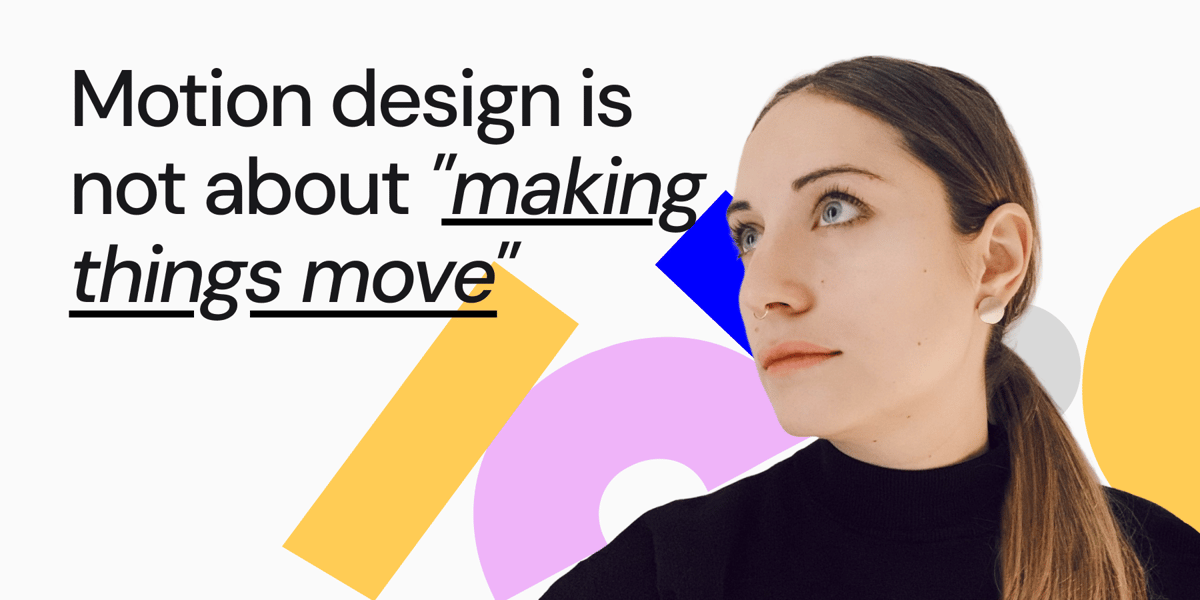
At LottieFiles, we often talk about motion as a system and how teams can create, manage, and use it consistently across their products. But we also wanted to hear from the people creating motion every day and understand what it means to them.
For Ilenia, motion is much more than something you add once the design is finished. It is a design decision that should be considered from the beginning, just like color, typography, or any other part of a brand’s visual identity.
It is a perspective that really resonated with us, and one we wanted to share with the wider design community.
Here’s Ilenia, in her own words.
About illo

illo is a creative studio founded in 2012 by Ilenia Notarangelo and Luca Gonnelli in Turin, Italy. The team specializes in illustration and motion design for brands like Google, Youtube, and Samsung.
When I started my career in 2012, motion design was a way to express new ideas.
The sun was shining. We trusted that technology could make our lives better. We were on Facebook looking for old primary-school friends to organize pizza nights, and scrolling Instagram actually felt inspiring.
There were trends — real ones.
Every year, or every couple of years, certain motion design features clearly emerged, carrying the feeling of something new.
Then the 2020s arrived.
And even if it’s still too early to judge an entire decade, they brought a new level of complexity into our lives.
Digital markets became saturated. Big players grew corporate. An AI tsunami hit. Content overload. Influencer marketing turned into an endless loop of not-so-new ideas — often deliverable by just one person talking to a selfie camera. Social media is now ruled by algorithms and flooded with ads. In the end, people went back to watching TV — just zapping every five seconds.
So what’s the role of motion design in this context?
We can still use motion to tell stories. To illustrate complex ideas and make them more approachable. And my hope is that, as humanity, we’ll keep seeking complexity — and with it, new ideas, new inspiration, and new ways of expressing them.

But today, its real power lies in representing a brand’s tone of voice.
It’s not just what you say — it’s how you say it. And motion is what gives brands their unique way of speaking.
Motion design is brand behavior.
At illo we’ve always treated motion as more than an add-on. It’s not decoration. It’s not “let’s animate this at the end.” Motion is the thing that tells you where to look, when to feel something, why you should even care.
I like to think of color as our vocabulary, illustration as our alphabet… but motion? Motion is the rhythm. The punctuation. The thing that turns a list of words into a story. You can stare at a static image and think, “that’s nice.” But when it moves, you get the full sentence. You get the tone of voice. You get the vibe.
The thing about contemporary motion for brands is that it works on two levels.
On one hand, it’s a system: rules, transitions, behaviors. How a brand breathes, how it repeats itself, how it becomes recognizable over time.
On the other hand, it’s pure surprise. The bounce. The slide. The tiny timing tricks that excite us before we even realize why.
Humans are wired to follow movement. It’s instinct
So yes, motion makes things functional: it guides, it clarifies, it creates consistency.
But it also makes things emotional: it surprises, it energizes, it makes people feel something.
If you ask me for a definition, here it is: motion design is not about “making things move.”
It’s about making things make sense — and, even more, making things feel.
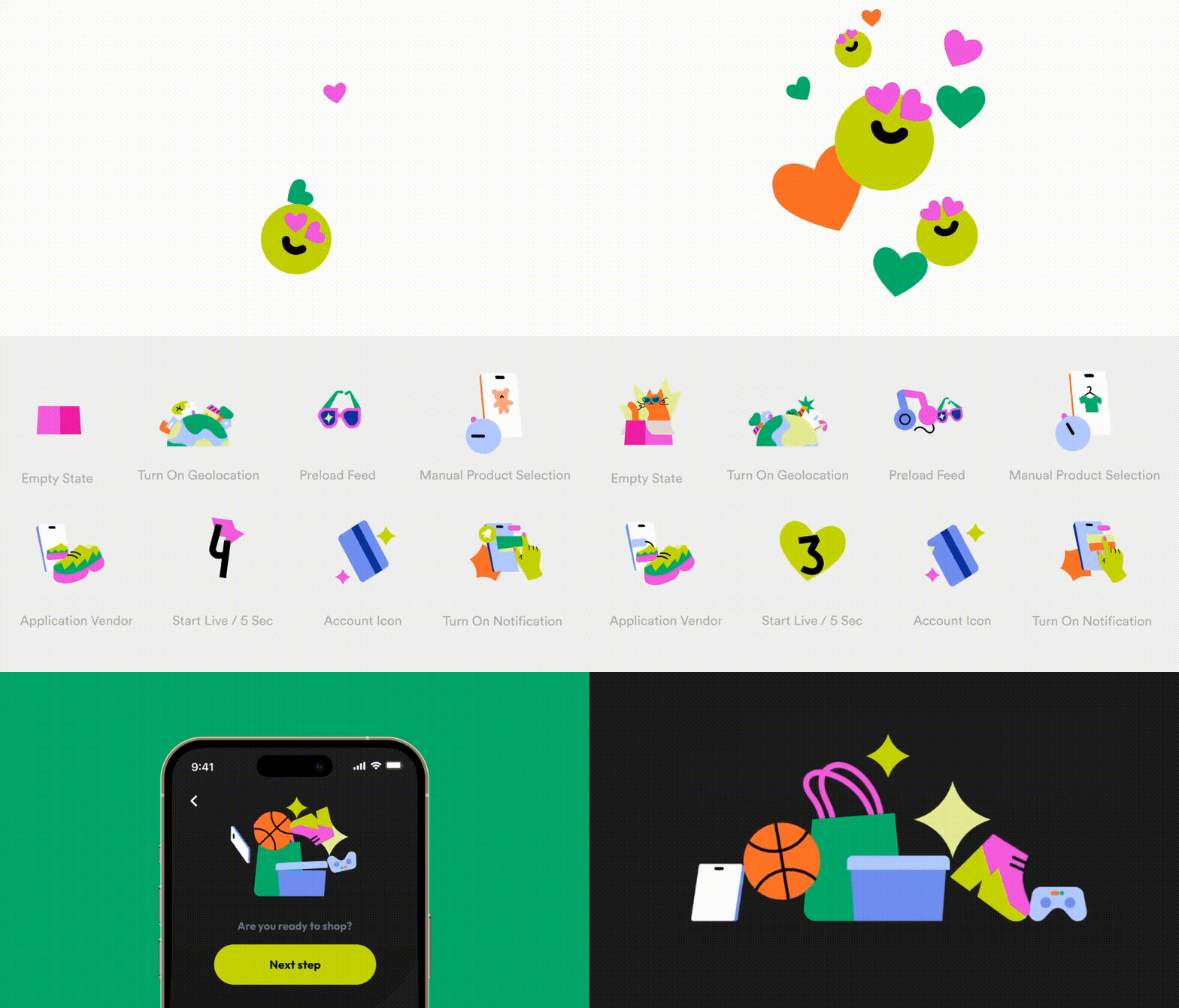
The rule: don't be too literal. Let people bring their own meaning. Because that's what stories do.
Now we’re entering the second half of 2026.
We speak more with our AI assistants than with our partners. We’ll soon have stay-at-home robots. We’re preparing a mission to Mars. We have AI and models that can generate a brand identity in forty seconds. But motion design in a real digital environment can still drain your device performance, create visual noise, and break an experience faster than almost anything else.
So if you add motion — and you should — be mindful about it. Not cautious. Mindful. There's a difference.
Cautious means you add as little as possible to stay safe.
Mindful means every movement has a job.
Function or emotion. Clarity or feeling. Ideally both.
But never neither. And never just because you can.
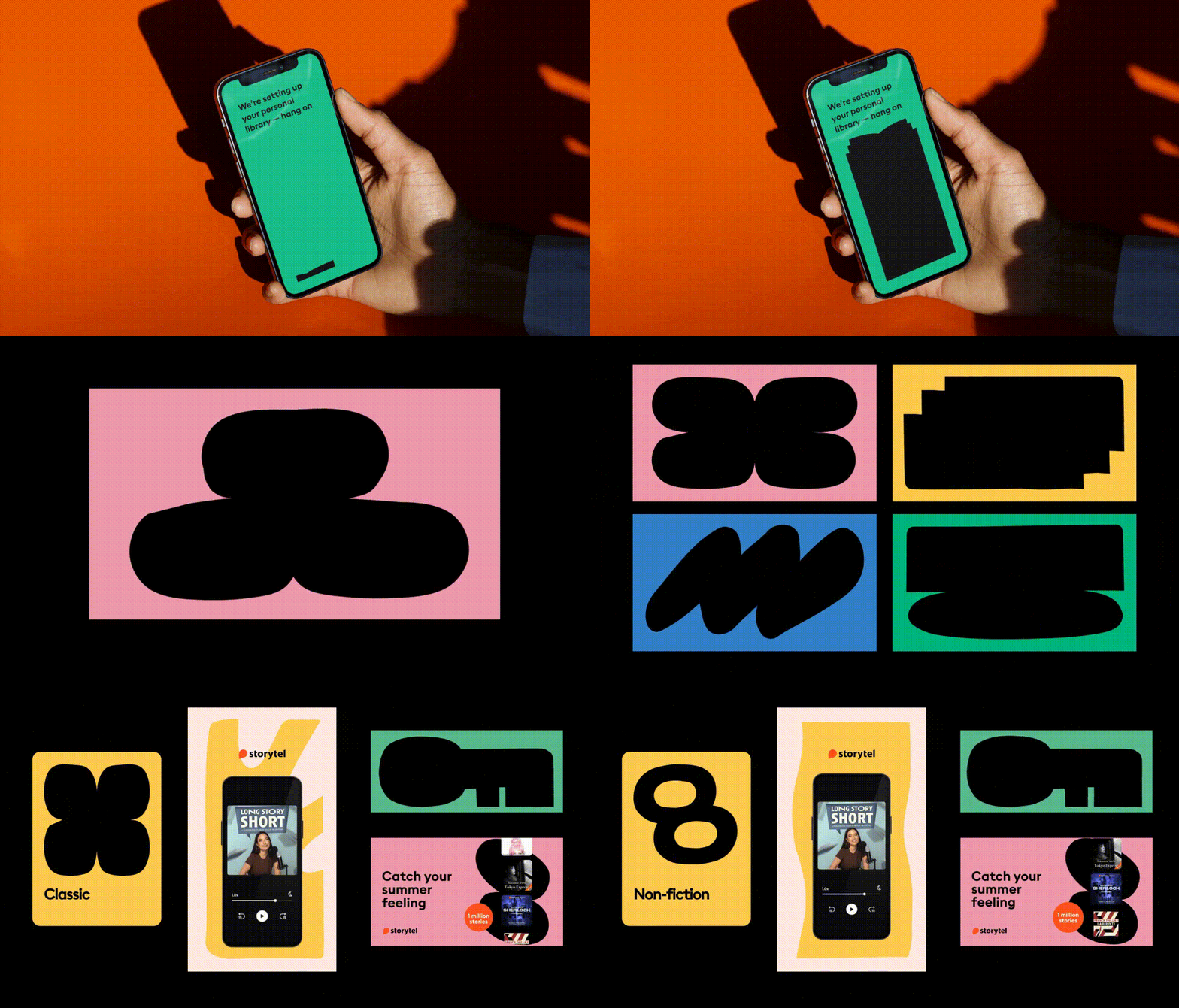
The brands that get this right are the ones that treat motion not as a production step but as a design decision made early — at the same time as color, typography, illustration style. Not animated at the end. Designed from the beginning with movement in mind.
Because motion is not a layer you add on top of a visual identity.
It is the identity. It's how a brand behaves in time.
And that's the shift worth making — from thinking about motion as a technical deliverable, to treating it as the rhythm of everything else.
Follow Ilenia Notarangelo, Founder & Creative Director @illo.tv @ile_no
You may also like
From PNG to Premium: How Visual Designer Madhavi Manushree R Animates Luxury
Some designers chase polish. Madhavi chases the feeling of premium.

Establishing an Open Standard for Vector Animation
Explore its journey of motion design, the Lottie 1.0 spec and what’s next.
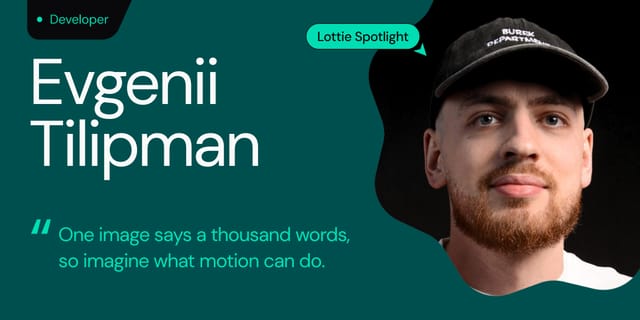
Lottie Spotlight: How Evgenii Tilipman Builds Websites That Speak for Themselves
Read how developer Evgenii uses motion design to clarify complex ideas, enhance storytelling, and build high-performing websites.
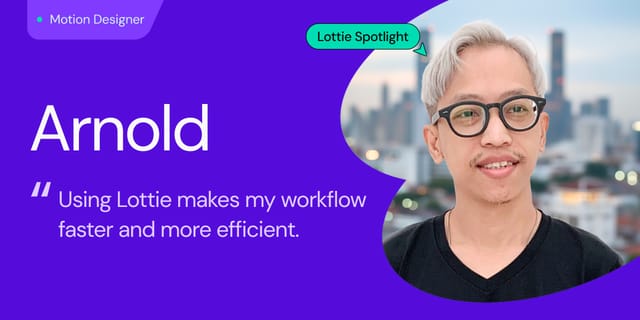
Lottie Spotlight: Arnold – Breathing Life Into Lines
From sketchbooks to sleek digital interfaces today, read Arnold’s journey as a motion designer.